

Teach
Organize
Read, watch and listen
Check the details
For engineering teams
- Engineering onboardingNew engineers learn from the teams who built your systems.
- AI enablementThe engineers who already use AI well teach everyone else.
- Tech talks and workshopsEach team runs its own series, and every talk stays findable.
For customers and partners
For every team
Read, watch and listen
Check the details
Speakers
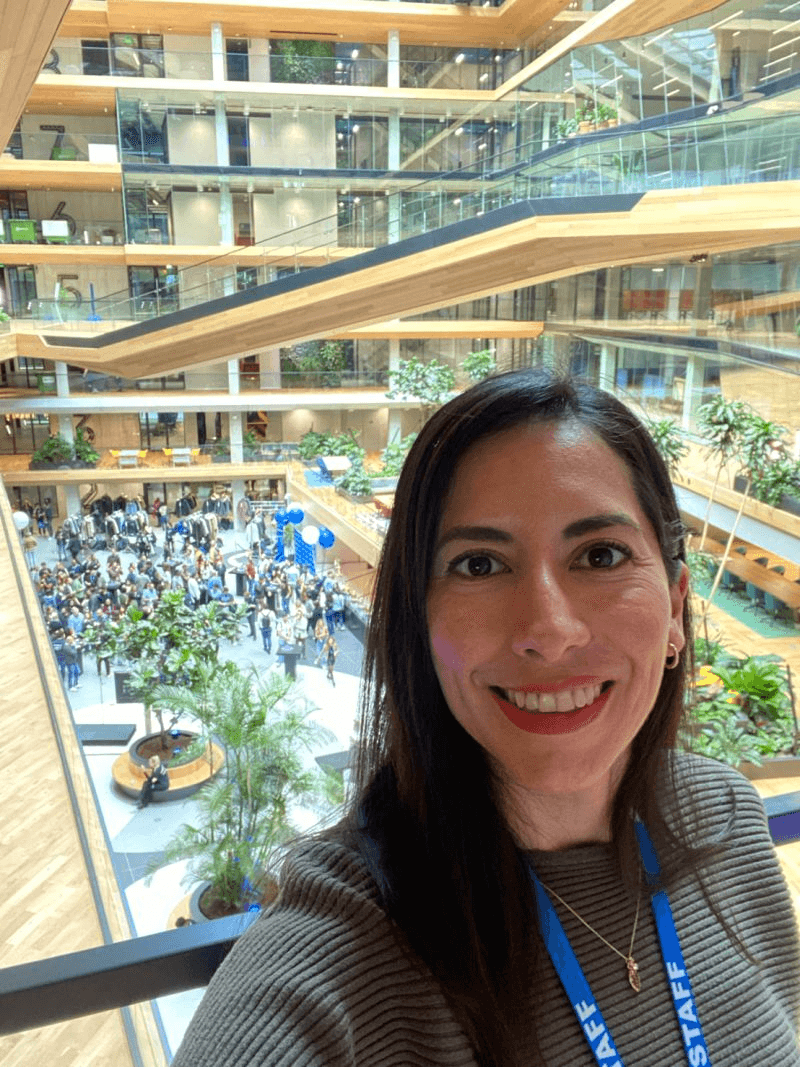
Denisse Groenendaal-Lopez
Global Learning & Development Business Partner
Denisse Groenendaal-Lopez is the Global Learning & Development Business Partner for Engineering, Data, AI, and Tech Infrastructure at Booking.com. With a background that spans continents and industries, Denisse has led learning initiatives from corporate universities in manufacturing to cutting-edge programs in tech. At Booking.com, she helps drive a peer-led, decentralized learning culture, partnering directly with technical teams to scale knowledge sharing, support innovation, and prepare for the future of AI. She’s passionate about aligning L&D to business outcomes, enabling craft-based development, and making learning accessible, timely, and transformative. Previously, Denisse built the Philips Lighting University during the company’s pivot from hardware to high-tech services, giving her deep insight into what it takes to upskill global teams in times of change.
Inside Booking.com’s Peer-Driven L&D Culture with Denisse Groenendaal-Lopez
TL;DR
Peer-Driven L&D is more than a trend—it’s how leading companies like Booking.com build resilience, innovation, and collective intelligence. Denisse Groenendaal-Lopez, Global Learning & Development leader for engineering, data, AI, and ML at Booking.com, shares how her team built a culture where experts drive learning, knowledge is shared openly, and AI plays a growing role in scaling development.
What We Mean by Peer-Driven L&D
Traditional learning models assume that knowledge flows from the top down. But in high-growth, knowledge-intensive companies, that model slows things down. Peer-Driven L&D flips the script.
Instead of HR or L&D “owning” all learning, the role shifts to:
Empowering experts to teach what they know.
Creating space for learning moments in the flow of work.
Connecting decentralized programs into a coherent ecosystem.
This isn’t just about efficiency—it’s about survival in fast-changing industries. When employees share knowledge freely, organizations adapt faster than competitors.
From Philips Lighting to Peer-Driven Learning
Denisse’s path into L&D began at Philips Lighting, during a critical inflection point. The company was shifting from selling light bulbs to building digital solutions like Philips Hue. That wasn’t a small pivot—it was a complete reinvention of its business model.
And L&D was at the center.
“We weren’t just teaching skills—we were enabling a shift in business models.”
Denisse and her colleagues built Philips Lighting University, a hub for upskilling employees on technology, sales, and digital services. It was one of her first lessons in how L&D can be strategic, not just supportive.
That experience set the stage for her work at Booking.com, where peer-driven approaches became the defining principle.
Booking.com’s Unique Learning Ecosystem
At Booking.com, Denisse found a culture that already leaned toward peer-driven learning. Employees were experimenting, failing fast, and sharing what they knew without waiting for formal approval.
The company structured its L&D function around three key elements:
Centralized strategy programs
Leadership development, onboarding, and large-scale initiatives.
Designed to align with organizational values and long-term goals.
Embedded business partners
L&D professionals dedicated to specific units like engineering or product.
They act as translators, connecting business needs with learning resources.
Craft-based knowledge sharing
Communities of practice (e.g., engineering, UX, data science) that set standards, define skills, and facilitate peer learning.
A way to operationalize tribal knowledge and make it scalable.
This model ensures that Peer-Driven L&D isn’t random—it’s structured.
How Peer-to-Peer Learning Actually Works at Booking.com
One of the strongest examples of peer-driven L&D in action is the Engineering Manager Program.
Instead of importing a one-size-fits-all leadership course, Booking.com engineers co-created their own internal conference.
Why it worked:
Engineers trust engineers – Content came from colleagues facing the same technical and managerial challenges.
Iterative design – The program improved like a product release: pilot, feedback, refine, repeat.
Relevance – Training focused on collaboration with product teams and navigating tech-specific leadership issues.
“Learning was happening everywhere. Our role wasn’t to control it—it was to amplify it.”
This program is now a blueprint for other functions at Booking.com—and a case study for how peer-driven L&D creates scalable, high-impact programs without overloading central L&D teams.
Why Peer-Driven L&D Outperforms Traditional Training
Many organizations still rely heavily on centralized, top-down training. That model struggles in fast-moving technical environments. Peer-driven L&D works better because:
It’s contextual – Employees learn from people who do the same work, not from abstract case studies.
It’s scalable – Every subject-matter expert can become a teacher, multiplying L&D’s reach.
It builds culture – Knowledge-sharing becomes part of daily work, not an add-on.
It increases retention – Employees feel valued when they contribute as experts, not just consumers of training.
This shift mirrors broader movements in learning: from learning management systems (LMS) to knowledge ops platforms, from static courses to dynamic expertise-sharing.
AI’s Role in the Future of Peer-Driven L&D
Denisse is now focused on the intersection of AI and learning. At Booking.com, this plays out in two ways:
Everyday AI tools for learning teams
Curating and recommending content.
Automating processes like coaching follow-ups and catalog navigation.
Advanced AI for specialized teams
ML scientists and engineers use in-house AI models to push product innovation.
L&D ensures they also share back learnings through peer-driven forums.
The key is integrating AI into the flow of work. Instead of forcing people to leave their tools to find training, AI connects curated knowledge with real-time needs.
But Denisse emphasizes that AI isn’t a replacement for people.
“AI can surface knowledge, but peer-driven sharing makes it meaningful.”
Lessons for L&D Leaders Building Peer-Driven Models
From her journey, Denisse offers several lessons for anyone shaping the future of learning:
Anchor learning to strategy – L&D must drive transformation, not just compliance.
Empower SMEs as teachers – Provide tools and support, but let experts lead.
Design hybrid models – Balance centralized initiatives with grassroots peer-driven learning.
Experiment with AI – Use it to simplify discovery and logistics, but keep humans at the core.
Listen everywhere – Peer-driven L&D means valuing small, niche communities as much as enterprise-wide rollouts.
Why Peer-Driven L&D Matters Now
As organizations scale globally and move faster than ever, knowledge can no longer live in silos. Peer-Driven L&D is the operating model for learning at speed.
Booking.com’s culture shows that when companies give employees the space, tools, and encouragement to share, they unlock a compounding advantage of collective intelligence.
For Denisse, the philosophy is simple:
“When people share knowledge, it’s a win-win. You don’t lose anything—you multiply value.”
Conclusion: Building Cultures of Shared Learning
Peer-Driven L&D is not a “nice to have”—it’s how companies adapt, innovate, and thrive. Booking.com’s model shows that the best learning cultures aren’t dictated from HR—they’re co-created by employees, amplified by technology, and aligned with business strategy.
For L&D leaders, the takeaway is clear: Stop being the sole provider of learning. Start being the enabler of peer-driven knowledge.


Bring it to the demo. We’ll set it up as an event with you, and show what stops being your job.